In this page you will find all information regarding our annual show, from our guidelines to how to evaluate your tree when you’re preparing it for the show.
Annual Exhibit Guidelines
Our much-anticipated Badger Bonsai Society Annual Exhibit is just around the corner. Whether you’re exhibiting or simply attending, this year’s show promises to be an incredible celebration of bonsai artistry. We encourage all members to participate, share their passion, and enjoy the camaraderie of our bonsai community.
One of the highlights of our show has always been the People’s Favorite category, where the public votes for their favorite tree. This tradition, which has been part of our show since the very beginning, brings an extra layer of excitement and engagement for both exhibitors and visitors. It’s always a joy to see which trees capture the hearts of the community.
In addition to the People’s Favorite award, we’re introducing judged awards this year. Trees will be judged in two classes: Open (for experienced bonsai practitioners) and Novice (for those newer to the art). This allows all members, regardless of experience, to participate and showcase their hard work.
Three ribbons in each of the following categories will be awarded to Open and Novice class
exhibitors:
Third Place (white) Ribbon: A good example of the art of bonsai.
Second Place (red) Ribbon: A very good example of the art of bonsai.
First Place (blue) Ribbon: An outstanding example of the art of bonsai.
Two additional ribbons will be awarded to exhibitors selected from the First Place category:
Awards of Merit: An exceptional example of the art of bonsai, which exhibits unique
characteristics or design.
Best of Show: The specimen which best exhibits the highest quality of the art of bonsai.
Note: The judge will provide details on the qualities of each bonsai that determined his choices.
People’s Favorite: The public is invited to vote for their favorite tree as they view the
show. Votes are counted at the end of the show and the tree with the most votes is the
winner. People’s Favorite will be awarded to any tree, whether it receives a ribbon or
not.
Bonsai Practitioner Proficiency Levels or Classes
Exhibitors can determine whether they belong in the Open or Novice class based on their
experience level and past participation in bonsai shows. Here are some general guidelines:
Novice Class
- New to bonsai or have been practicing for only a few years.
- Still developing foundational skills in styling, wiring, and tree care.
- May have little to no experience displaying trees in shows.
Open Class
- Have several years of bonsai experience and a strong understanding of bonsai techniques.
- Confident in advanced styling, refinement, and long-term tree development.
- Have displayed trees in multiple shows.
- Class designation is based on the person, not the bonsai.
Show organizers will provide guidance to exhibitors in determining which class they fit into.
Essential Bonsai Skills for Every Enthusiast
To successfully grow and maintain bonsai trees, every enthusiast must develop proficiency and confidence in three key skill areas:
Horticultural Skills
Keeping my tree(s) alive: Mastering the fundamentals of tree care ensures long-term health and vitality.
- Watering principles – What, when, how, and why proper watering is essential.
- Tree placement in the environment – Understanding sun and wind exposure.
- Feeding and fertilizing – Knowing why, when, and what nutrients to provide.
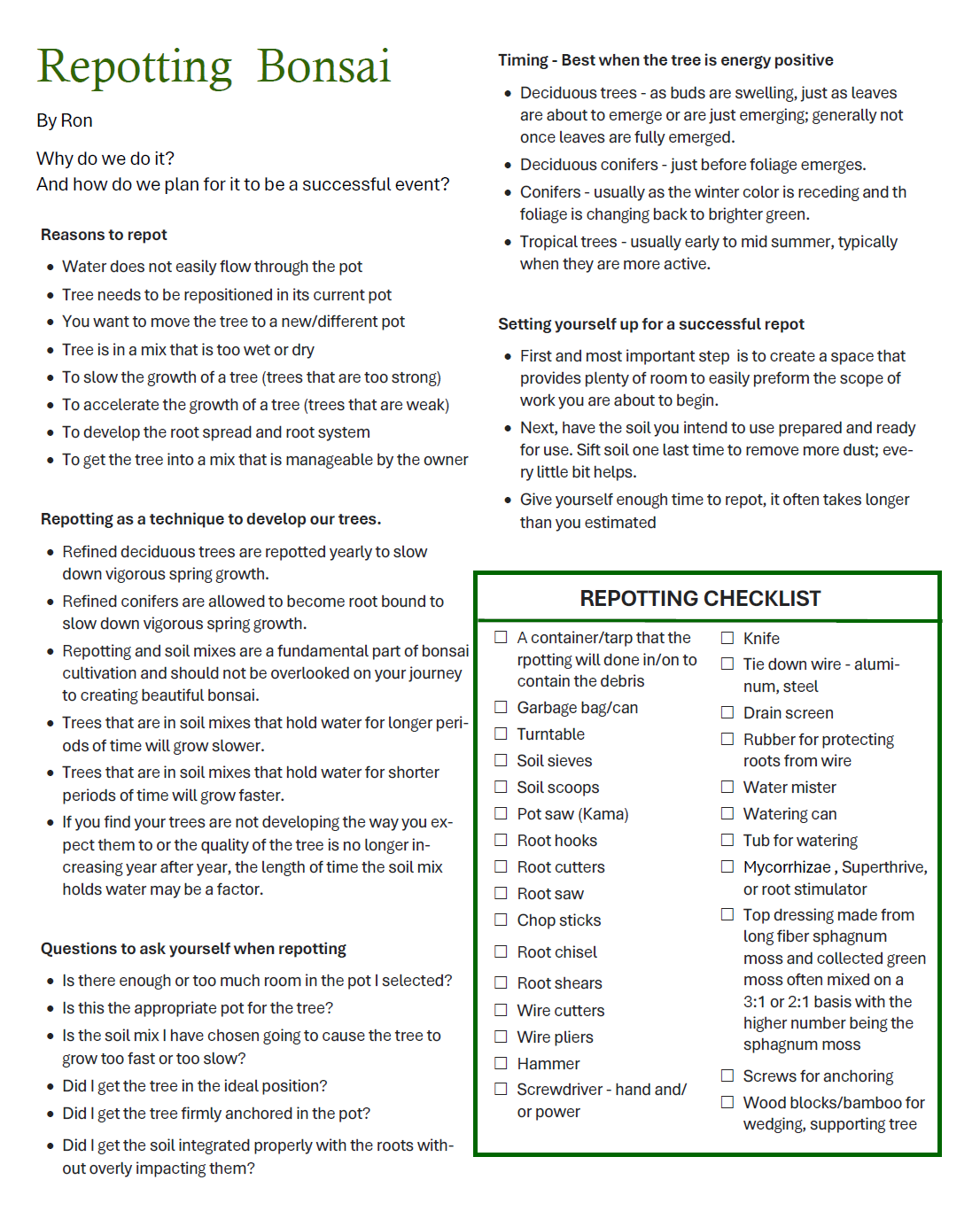
- Repotting – When and how to repot; aftercare for newly repotted trees.
Styling Skills
- Making my tree look good – Styling techniques shape the tree’s structure and aesthetic appeal.
- Growing Out Trunks and Branches – Understanding timing, techniques, and feeding during
- development.
- Pruning & Cutting Back – Seasonal activities; knowing why, when and how to prune; using cut paste (or not); and building ramification.
- Wiring Techniques – Choosing the right wire and correct size (aluminum, copper, or steel) for different purposes; proper wire placement for effectiveness and aesthetics; and structural, secondary, and tertiary wiring techniques.
Presentation Skills
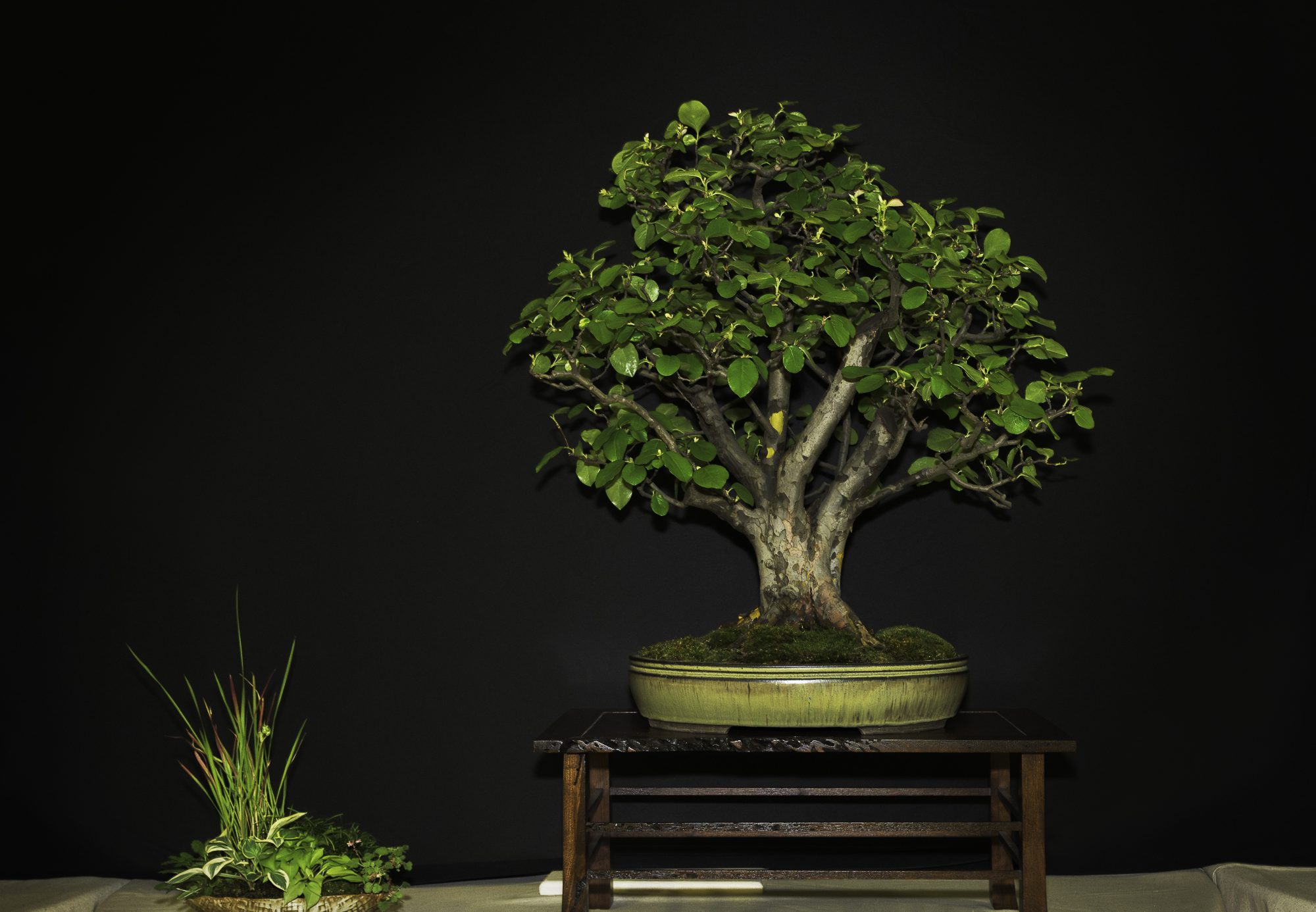
Creating a great composition: A well-displayed bonsai enhances its artistic
value.
- Pot selection – Choosing the right pot for balance and aesthetics.
- Stand selection – Enhancing the display with an appropriate stand.
- Accent selection – Selecting complementary accent pieces.
- Composition placement – Arranging elements for the best visual impact.
- Attention to detail – Refining the small details that elevate a display.
- Artistic presentation – Achieving a cohesive and visually appealing final composition.
Guidelines for Exhibited Bonsai
- All exhibited trees must be healthy, well-maintained, and free from pests or disease.
- Trees should be displayed in clean, appropriate bonsai pots that complement the tree’s aesthetics. Pots should be free of cracks, chips, or dirt. Use olive oil to add sheen to unglazed pots.
- The tree should be properly watered and pruned before the show to ensure it looks its best. Dead or yellowed leaves and dead branches should be removed.
- Dead leaves, weeds, and any debris should be removed from the soil surface.
- Use moss to cover the soil surface and create a natural, textured look. Use different textures and colors to add visual interest to the display. Avoid covering the main roots and trunk. The nebari should be visible.
- Visible wiring should be minimal and neatly applied. Excessive wiring or training wires that distract from the tree’s aesthetics should be avoided. Deciduous trees are typically not shown with wire; it is more acceptable for coniferous trees to have wired branches.
- Accent plants (kusamono), suiseki (viewing stones), or other appropriate display elements may be used. Accent pieces should be subtle and enhance the overall composition, not overshadow the bonsai.
- Stands, if using, should be clean, undamaged, and sized proportionally to the tree
- The goal is for all exhibitors to show as many trees as they wish in balance with others. Exhibitors are encouraged to bring up to 5 trees, with the understanding that not all will be shown if space limitations prevent others from showing their bonsai.
- The top winning tree from the previous year will be displayed in the Olbrich lobby if it is available. If that tree is not available, the second or third place tree from the previous year, if available, can be displayed with the exhibitor’s permission.
- Although exhibitors are encouraged to bring different trees two years in a row to keep the show fresh, bringing the same tree two years in a row is not prohibited, especially if that tree has changed since the previous show.
- We will have a table for Bonsai in Progress to show the public trees in various stages of development.
- Trees for Exhibit Only are not eligible for any award.
- Bonsai purchased fully styled will be shown as for Exhibit Only. The exception to this is if the tree has been in the care of the exhibitor for more than two winters since the date of purchase. Such trees should have been worked on by the current owner in the time since original purchase.
- The judge will gather a group together in the later afternoon, walk the show, and make comments/answer questions regarding trees and how he sees them.
- All trees entered in the show will receive a critique because this is how we learn. Each tree will receive a critique sheet with details. This includes the tree placed in the lobby and Exhibit Only trees.
Procedures for the Day of the Show
- Exhibitors will be required to register at the staging table the morning of the show. There they will receive their tree card(s) and be allowed place their tree. Placing trees for display without registering first will not be allowed.
- Exhibitor class will be determined at registration and identified on each card with “N” for Novice, “O” for Open, and “EO” for Exhibit Only written in the bottom right-hand corner of the card.
- All exhibited bonsai must have a fully completed tree card before placement.
- Full set up of tables and backdrops must be completed before trees can be placed.
- We will hand out some of the cards at the club meeting the Thursday before the show for those people who can fill out their cards before the show and bring them. This will save time the morning of the show.
- Final placement of bonsai will be determined by the show coordinator. Trees may be moved for better composition and balance.
Evaluating Your Bonsai
When we prepare our bonsai for exhibition, we consider how they will be perceived by the judging process. Look at your trees from a subjective point of view and begin to evaluate as the judge might. In the three categories, Horticulture, Styling, and Presentation, ask yourself the following questions which are arranged from novice through advanced considerations.
Hopefully this article will give you some good ideas and questions about how to evaluate your bonsai for judging.
Horticulture
Health
- Is your tree in apparent good health?
- Is it free of disease, insect damage?
- Is it free of blemishes, sunburn and windburn?
- Does it have fresh spring growth, elongates and matures evenly on all the branches)?
Foliage
- Is the color of the foliage dark green (or typical for the particular species and season).
- Is the foliage shaggy or overgrown?
- Is the size and density of the foliage consistent and firm?
- Are juvenile, mis-formed, miscolored or dead foliage present?
Styling
Roots
- Is the shape of buttress at soil level?
- Are surface roots well distributed and high quality?
- Are the roots appropriate to style and species of tree?
Trunk
- Is the trunk clean and free of algae and moss?
- Does it display well defined size, movement and taper?
- Does the bark show maturity?
- Are features highlighted and appropriate to style and tree?
Branching
- Is there defined position and movement of branches?
- Is there enough negative space?
- Is the size of branches appropriate to position?
- Are the extent of taper and ramification appropriate to style and tree?
Apex
- Are there too many apexes?
- Is the apex too heavy on top?
- Does it show direction?
- Is it well developed, clearly defined and properly shaped?
Form
- Is the tree correctly positioned within the pot?
- Are the front of tree and style chosen for the tree?
- Is the general shape well defined, clear and to the style of the tree?
- Does it have pleasing artistic vision?
Age
- Does the tree convey the impression of Age?
- Does it have asymmetry in the structure?
- Does the tree have dynamic quality or movement?
- Is the tree’s natural or abstract quality apparent?
Technique
- Are wire scars present?
- Is the wire well applied?
- Does it show well defined deadwood with no excessive marks or evidence of tools?
- Is movement believable?
Presentation
Surface
- Is the surface clear of weeds and debris?
- Is there conscious application of moss or appropriate topical treatment?
- Does it convey naturalness and overall composition?
Pot
- Is the pot clean and oiled?
- Does it have good proportion to the tree(s) not over or under potted?
- Does the pot color balance with the tree?
- Are the pot shape, texture and style right for tree?
- Does the pot age and patina match the tree?
Stand
- Does the stand size pair well with tree/pot combination?
- Is it the correct height for viewing the tree?
- Is the quality of the stand equivalent to the quality of pot and tree?
Accent
- Does the accent pair well with tree?
- Is it appropriately potted?
- Is it positioned and proportional to accompanying tree and display space?
- Does it represent the season or tells a story of composition?
Display
- Is the overall appearance clean?
- Was it purposely and thoughtfully composed?
- Does it convey abstract or an overall sense of balance and harmony?
- Is the story evident and impressive?
Information sourced from http://www.quietcrowbonsai.com